
Are Sedona vortexes real? A Christian perspective on ‘spiritual energy’
Quick take: Are Sedona vortexes real? Is their famous “spiritual energy” a metaphysical reality, a biological reaction, or the work of God? Christian author Mackenzie Ryan Walters offers a faith-based perspective that suggests the awe we feel is a response to the Creator, not his creation.
When my husband and I arrived in Sedona, Arizona, we were surprised by the amount of New Age tourism.
Every other store seemed to advertise crystals, vortex tours, and various forms of spiritual healing. It begged the question: Are Sedona vortexes real?
Missing from many vortex explanations I’ve read are two perspectives I’d like to explore: A Christian explanation and a biological one.
Table of Contents ▼
1. Where are the Sedona vortexes?
We had booked a quick weekend trip to get some much-needed winter sun and to hike Sedona’s red rocks.
It was only after we arrived that we discovered that many of the vortex sites were in the same locations we planned to hike.
Some of the most advertised spots are:
The Chapel of the Holy Cross vortex
Chapel Rock vortex
Bell Rock vortex along
Airport Mesa vortex
Boynton Canyon vortex
Many New Agers or curious travelers believe the Sedona vortexes are “thin” spots between the spiritual and tangible worlds.

My husband Andy and I visited Sedona, Arizona, in January 2026 to hike the red rocks. We hadn’t heard about the “Sedona vortexes” before we arrived.
2. What are the Vortexes of Sedona?
While browsing a local gift shop, I spotted yet another guide promoting the so-called vortexes.
I couldn’t help myself. I asked the shop clerk, who looked like he was into such things, what they were.
He seemed a bit annoyed by the question.
An older woman standing to my left chimed in.
“See. I’m not the only one who wants to know about the vortexes,” she said.
The cashier shook his head. He was older, with shaggy gray hair and pierced ears, and seemed bored by the question.
“It’s electromagnetic energy,” he said to me, ignoring the other lady. “Vortexes are where energy converges.”
I tilted my head, not understanding what he meant. He continued:
“All of Sedona is a vortex,” he said. “It just converges on certain points. When you go to a vortex, you might get a headache, or you might get a vision. You might get healing. You might get high."
“You might get nothing,” the older woman said in a huff.
“You might get nothing,” he said, obviously done with the conversation.
Considering the tourism money that’s been funneled into Sedona’s shops, signage, and tours to promote the vortexes, I figured someone would have a clearer answer online.
Instead, my search started to feel like a punchline to a Nate Bargatze skit:
“What are the Sedona vortexes?”
“Nobody knows.”
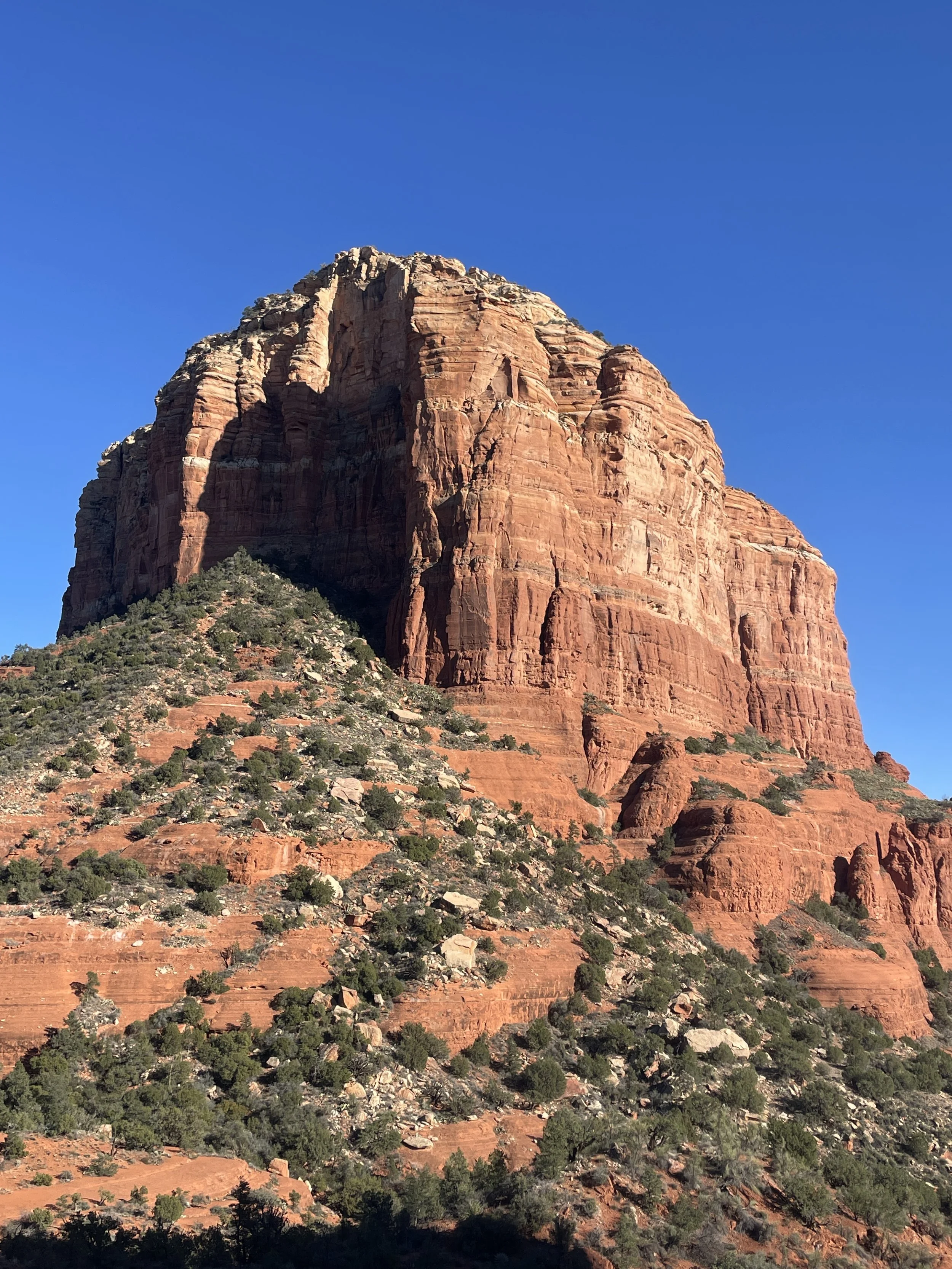
An image of the so-called Bell Rock vortex near Sedona, Arizona, taken in January 2026.
3. Are Sedona Vortexes real?
If you believe in the spiritual world, as I do, it’s helpful to know that not everything is a sign of the supernatural.
My pastor talks about checking yourself.
“Was it God?” he says. "Or was it the pizza from last night?
Put another way:
“Was it the vortex? Or did you drink enough water last night?”
Sedona elevation is around 4,300 feet, but its peaks reach far higher, up 7,000 feet.
While altitude sickness could cause some of the symptoms people feel on vortex hikes, a far more likely explanation is dehydration.
When you hike in arid conditions like Sedona, the sweat dries before you feel it, leaving you unaware of how much water you’ve lost.
The American Hiking Society says to drink extra water before you start hiking, and to avoid alcohol the night before. Beer, wine, and other drinks “significantly contribute to dehydration.”
Dehydration is a serious issue, especially on the trail, as it can cause headaches, muscle tightness, and dizziness — some of the sensation vortex seekers experiences.
Even if you’re well hydrated, though, a heightened sense of the world can be explained by adrenaline.
Doctors say adrenaline can cause powerful emotions of alertness or fear, or excitement or thrill.
As my husband and I scrambled around the so-called Bell Rock vortex, I could feel my heart beating.
The rock curved tightly near the top, and I tried not to look at the drop-offs, which were steep.
Every move I made mattered, and every time I looked down, I felt dizzy.
Other hikers climbed higher, but I stopped about halfway to the top.
I was feeling a rush of energy, but it wasn’t the vortex.
Adrenaline had kicked in.
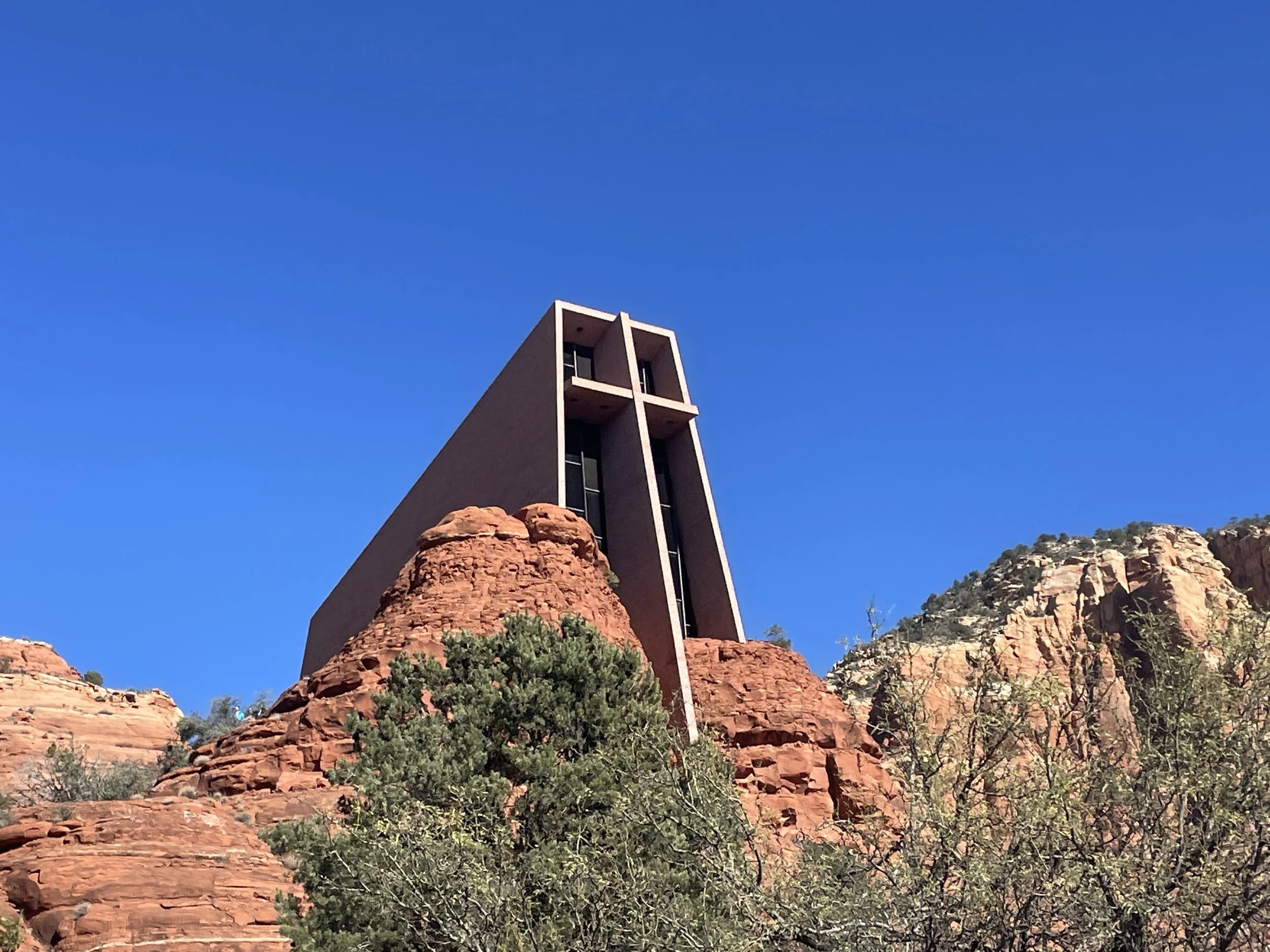
Christian author Mackenzie Ryan Walters and her husband Andy found it ironic — and in alignment with the Bible — that the “strongest” vortex in Arizona is located at a church.
4. Which Sedona vortex is strongest?
If you believe in the spiritual energy of the vortexes, let’s consider where the most “powerful” Sedona vortex is located.
According to the Center for the New Age, the strongest Sedona vortex location is the Chapel of the Holy Cross.
It’s ironic — and also biblical — that the most spiritual “vortex” is a church.
Built on a rock outcropping on the southeast side of town, it’s a towering site. The chapel’s design was inspired by the Empire State Building.
Its a modern chapel with floor-to-ceiling windows, and its integration into the landscape prompted Architectural Digest to call it one of the “most beautiful churches in the world.”
Millions travel to Sedona each year to visit. Their spiritual pilgrimage is one of reflection and surrender; some have reported answered prayer and miracles. We visited twice while we were there.
The Bible shares a spiritual story of God and his people, and it includes a fair share of references to angels and demons. It recognizes a spiritual world we cannot see.
Scripture makes clear that these spiritual beings were created by God. Ultimately, God is in control.
Many New Agers believe in the spiritual world, but as one Christian convert said, “The just don’t realize exactly what spiritual world they are mixed up in.”
The fact that the New Age Center recognizes the chapel’s spiritual significance startled me at first. But upon reflection, it makes sense — and holds true to the story God gave us in the Bible.
So what is the most spiritual place in Sedona?
Simply put, a church.
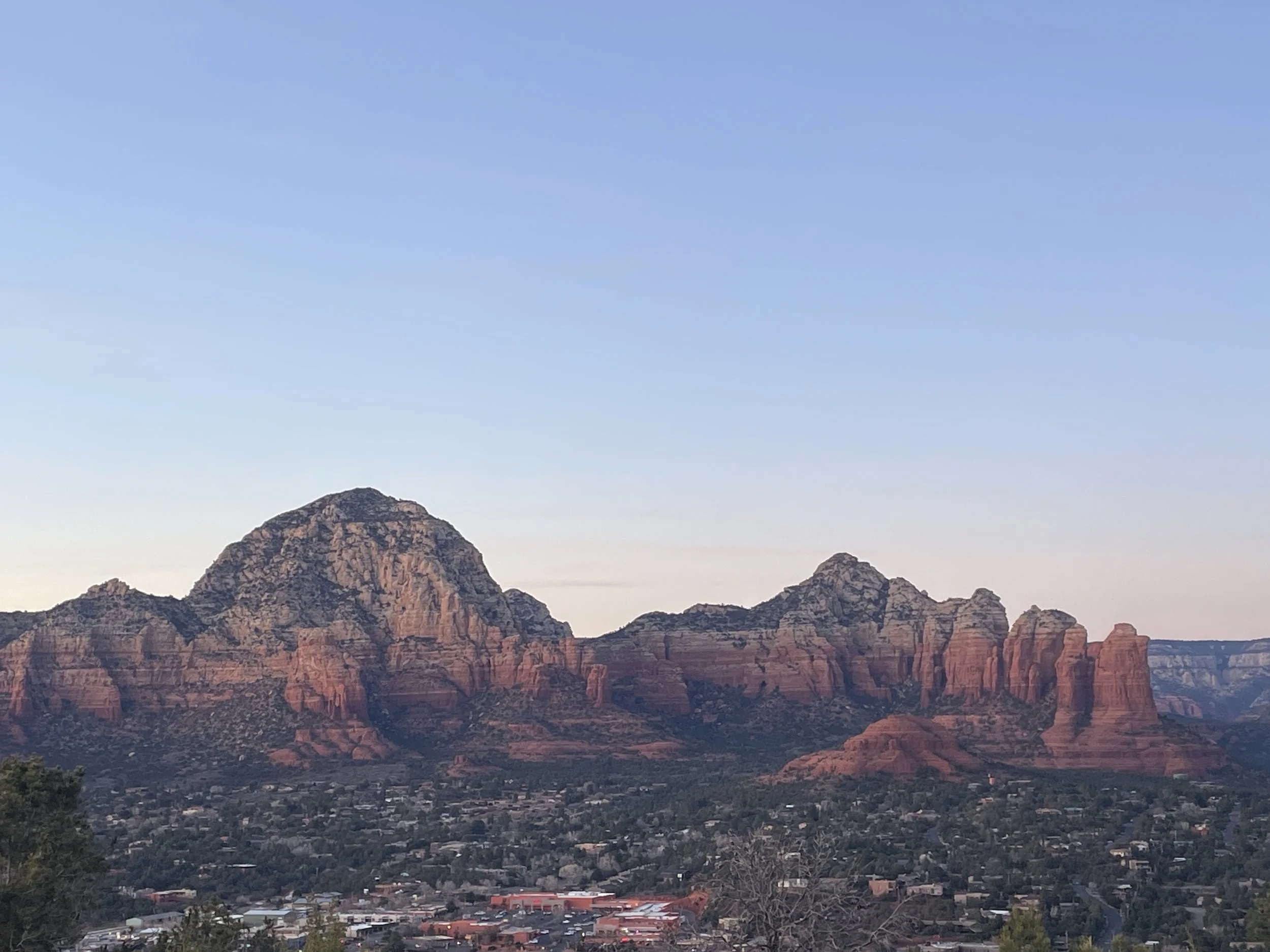
A view from the Airport Mesa overlook in Sedona, Arizona, at sunset in January 2026. Many consider the nearby Airport Mesa hike one of the Sedona vortexes. It does have stunning views, and dozens of people gathered to see the sun go down when we visited.
5. What do the Sedona vortexes mean?
I love hiking and being in nature, and I often find myself feeling at peace.
Away from the schedule and pressures of daily life, I can pause and experience the beauty of God’s creation.
One reason I believe in the Bible is that it accurately portrays the world as it is (not how I wish it would be), including my personal experiences with the divine while hiking.
It’s difficult to describe: An overwhelming sense of connecting to something bigger than myself.
After reaching a mountain peak or vista, or pausing to marvel at a sunrise or the expanse of an ocean, I well up with emotion — admiration, worship, wonder.
Awe.
Not for the mountains or rocks themselves, but for who they point to: Their maker.
Psalm 148:3-5 (NLT) captures this feeling when it says:
Praise him, sun and moon! Praise him, all you twinkling stars!
Praise him, skies above! Praise him, vapors high above the clouds!
Let every created thing give praise to the Lord, for he issued his command, and they came into being.
A lot of people sense God in nature, so I’m far from alone.
Sitting in the glorious Arizona sun, perched on a red rock with an expansive Sedona view, I felt God’s peace.
Not because it was some metaphysical “energy,” or because I had tapped into a Sedona vortex, but because I had connected with something more powerful:
God, the creator of heaven and earth.
Christian resources
➡️ Read short Christian stories and testimonies
➡️ Discover the 15 best books on prayer for Christians
➡️ The best apologetics books for beginners.
➡️ The 7 best books on early church history
➡️ How to share your Christian testimony as a narrative story
Join our newsletter
➡️ Looking for an uplifting source of Christian encouragement? Join our free newsletter and receive testimonies, book and gift guides, journaling prompts, and more!

Mackenzie Ryan Walters is the author of “Faith Storytellers: Unleash the Power of Your Story,” which shares Christian testimonies and stories, as well as curated lists about Christian books, gifts, and more. A national award-winning former journalist who’s covered a presidential campaign, been inside NASA, and reported on education and schools, Mackenzie now edits the Faith Storytellers website and is passionate about lifting up and sharing the story God is writing in the world.